|
SOLO FLIGHT THE CHARLIE CHRISTIAN LEGACY |
|
|
|
CHARLIE CHRISTIAN
AN EXAMINATION
OF IRA GITLER’S
“SWING TO BOP”
|
|
Chapter 3:
The Myths of
Minton’s: Part One: Charlie Christian Throughout Swing to Bop Charlie Christian’s name comes up a number times,64 and the musicians generally focus on two aspects of his playing: (1) the harmonically complexity of his soloing over bridges, and (2) the rhythmic advances he made related to phrasing. Dexter Gordon first says Christian “wasn’t playing guitar at the time as other people were playing guitar.”65 In relation to the way Christian approached bridges, Red Callender said, “…starting with Charlie Christian, he really dug the interrelated chords leading in and out of a bridge…,”66 and James Moody observed, “I used to remember that tune [“Stompin’ at the Savoy”]. They used to play it, and I remember Charlie Christian would be playing on it, and he’d start playing, and on the outside [A section] of it he would just be going along slowly, and as soon as he came to the difficult part, the bridge, he would tear it up…he was really involved with chord construction.”67 While both Callender and Moody are clear that Christian was using more complex chords during the bridges of tunes, in this chapter, I will look at specific performances to illustrate what Christian did on those bridges.
64
Gitler’s pages 40-43 contain commentary on Christian from Dexter
Gordon, Red Callender, James Moody, Milt Hinton, Mary Lou Williams,
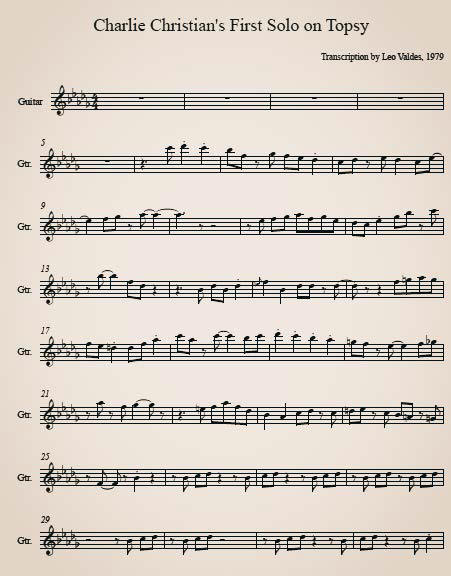
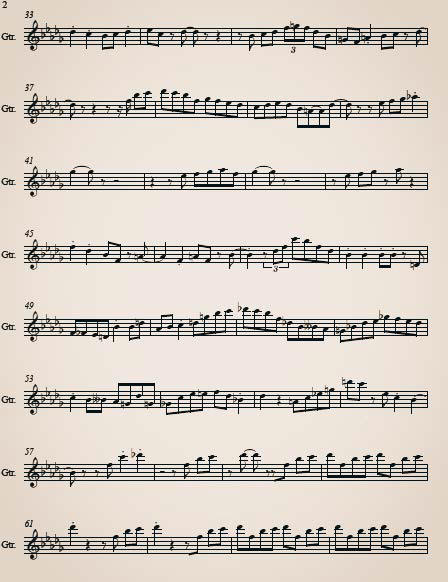
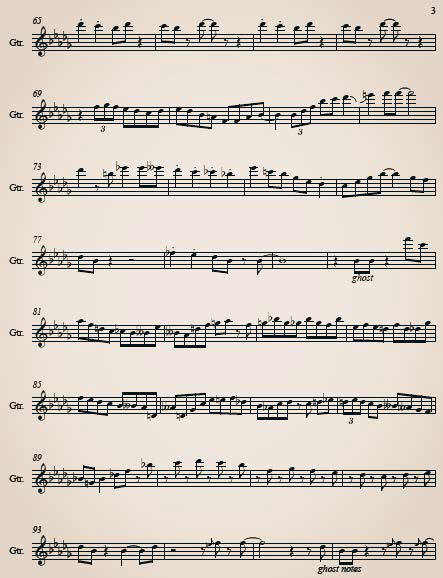
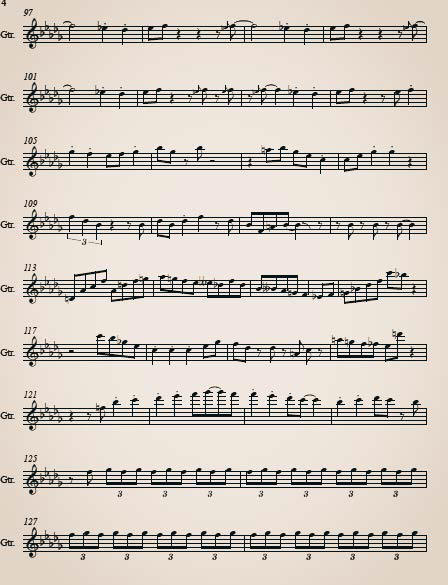
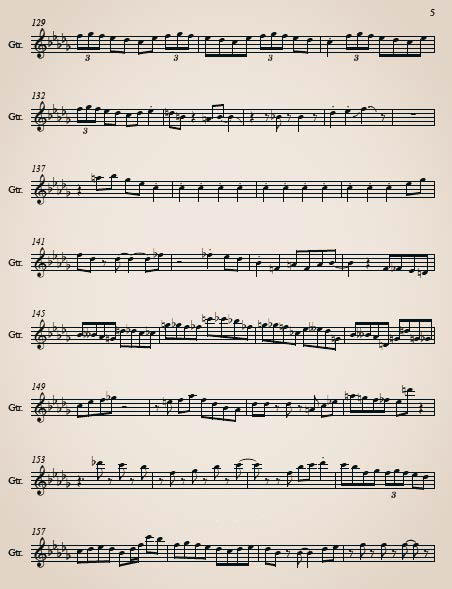
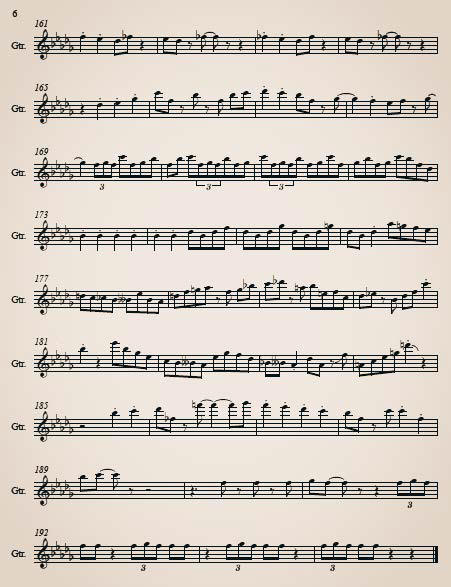
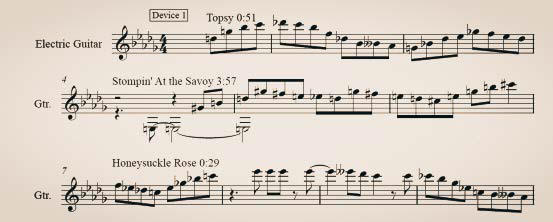
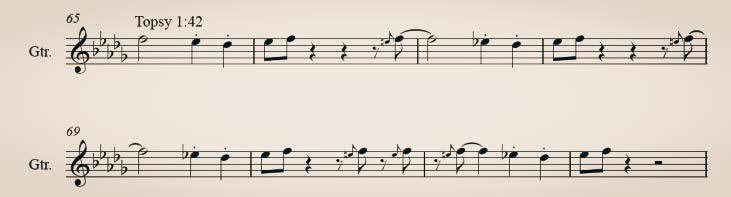
Eddie Barefield, Biddy Fleet, Jay McShann, and Barney Kessel. The improvisation on the chord changes from “Topsy” (which was retitled “Swing to Bop” on the Newman recording from Minton’s and is presented with no statement of the theme) from May 12, 1941, consists of a six-chorus solo by Christian, followed by four choruses by trumpeter Joe Guy, two choruses of the pianist (credited as Thelonius [sic] Monk on the Everest LP, but possibly Kenny Kersey), three more choruses from Christian and a few bars from Guy as the recording fades out. The rhythm section also included bassist Nick Fenton and Kenny Clarke. “Stompin’ at the Savoy” was recorded on the same date with the same group. After an explicit statement of the melody, Guy takes one chorus, followed by two from the pianist, three from Christian, three more from Guy, three more from Christian, and a restatement of the theme. “Honeysuckle Rose” (presented without a theme with the title “Up on Teddy’s Hill”) was recorded on an unknown date in May 1941 with Christian, Guy, Don Byas on tenor sax, and an unidentified rhythm section. Christian takes four choruses on this tune. See Leo Valdes’ transcription below:
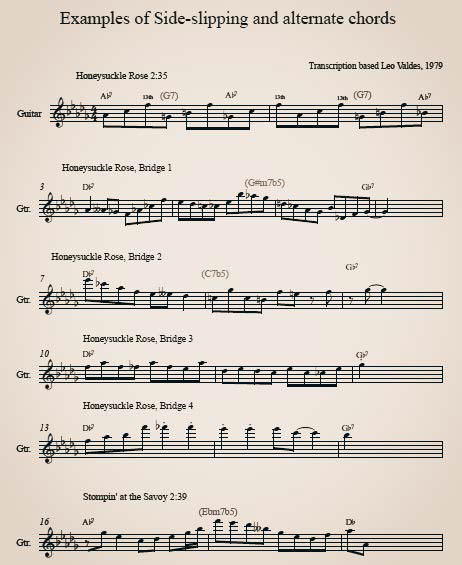
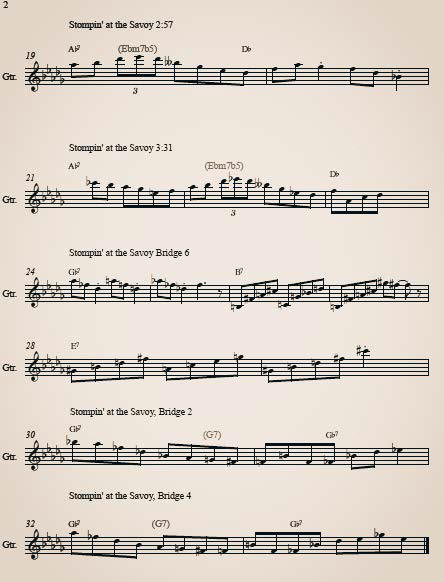
Though we don’t know exactly how this performance of “Topsy” begins, somewhat serendipitously, Jerry Newman’s recording opens about halfway through the sixth measure of presumably Christian’s first chorus, right as Christian plays a short three note motive that recurs throughout his solo. This motive (a simple C-Db-C [the second and third scale degrees of the tonic of Bb minor] figure of an eight note and two quarter notes, all played staccato) seems to have only a vague connection to the original melody of “Topsy.” Christian creates this connection by using similar pitches and a general blues feel, making it something between a thematic motive and an internal motive of this solo. Ultimately since it does not appear directly in the song’s melody it is an internal motive. Within the first eight beats of the recording, this motive appears twice, an octave apart. This simple half-step movement recurs in both A sections and bridges, in rhythmically varied and interrupted settings, reinforcing connections of phrases and sections of Christian’s first six-chorus solo. While the return of similar motivic material is one element of the thematic unity of Christian’s “Topsy” solo, the varied length of phrases and extended phrases is the more important factor of the solo’s overall coherence, as well as the more significant bebop innovation. Most importantly here, however, is the fact that Christian’s use of these different-length phrases sheds some lights on what Moody means when he says Christian “would tear it up” on bridges. As mentioned above, Christian’s “Topsy” solo opens with a two-and-a-half beat sub-phrase, which is just one part of a phrase that extends through bar ten. Bars eleven and twelve consist of a separate two-bar phrase. The remainder of this second A section (which in the original melody is an exact repetition of the first A, simply transposed up one fourth to the subdominant, Eb minor) and the first bridge consist of detached one to three beat micro-phrases. The bridge even contains the original A motive. The final A section of this first chorus is a repeated phrase of three eighth notes, which starts first on the upbeat of the first beat, the upbeat of the fourth beat, and then the upbeat of the third beat, briefly implying a grouping dissonance of 3/4, against the ongoing 4/4 accompaniment. Following this, the phrases move closer and then further away irregularly until the end of the first chorus. Christian continues developing this phrase in the second chorus, using it as a launching pad for a two-measure phrase in the third measure of the second chorus. Gradually Christian blurs the lines between his short phrases until the bridge of this chorus, which begins with a pickup from measure sixteen and continues through to the end of the phrase on beat one of measure twenty-three. Christian ends this chorus by repeating another two-beat eighth note phrase. By using another repeated very brief blues figure, Christian thematically links the ending of this chorus with that of chorus one. The pitches Christian uses here (F-Bb-C- Db) also create the effect of echoing an incomplete version of the motive stated at the beginning of this recording. And, once again as in chorus one, Christian continues this material into the following chorus and uses it to develop longer phrases, with a four-measure phrase – beginning on beat two of the fifth measure, continuing through to beat one of the ninth – that is immediately followed by another four-measure phrase. Presumably in the interest of creating tension with variable phrase length, Christian uses short blues figures to fill the rest of the second A section before an uninterrupted eight-measure phrase of eighth notes that begins with a pickup into the bridge and continues through to beat two of measure twenty-eight (the first of this chorus’s final A section). With its pickup and continuation into the next eight-measure section, this is an example of the rare type of phrase that Stefan Love calls a “double-accented phrase” because it “overlap[s] a downbeat at [its] beginning and end,”68 which effectively produces tension with the song’s form by anticipating the beginning and extending through the ending of an eight-measure hyper-bar. 68 Stefan Love. “An Approach to Phrase Rhythm in Jazz.” Journal of Jazz Studies 8.1 (Spring 2012): 19. Throughout Christian’s six-chorus solo on “Topsy,” he continues this pattern of ending his choruses with simple repeated, riff-based figures that fluidly continue into the next chorus. At the end of chorus three (just after his first explosive complete legato bridge), Christian slows down with detached eighth notes, repeating a simple E (#fourth scale degree) to F (fifth scale degree) figure, which he expands on entering the fourth chorus. Christian ends the fourth chorus with an eighth note triplet figure, alternating between F and Gb. The half-step movement in both of these figures recalls the opening recurring motive, even though they use different pitches. Again, he thematically links the choruses, continuing this figure, but extending it into an eighth note triplet followed by two eighth notes. Christian repeats this sub-phrase over the fifth chorus’s first four bars, creating another 3/4 grouping dissonance against the 4/4 accompaniment. Perhaps to provide more variety leading into the sixth chorus, Christian does not continue this pattern and instead uses new material from measure twenty-seven through to measure thirty at the close of chorus five. At the end of chorus six (and this solo), however, Christian returns to his theme of using a repeated riff to end choruses. In this case, it closely resembles a the riff from the end of chorus four, consisting of an eighth note triplet followed by two eighth notes and a quarter rest, which creates a final three against four grouping dissonance and overlaps with the first two bars of Guy’s solo. The lack of an explicitly final sounding ending to this solo and the jam session format of this performance at Minton’s imply that Christian may have been unsure of exactly how many choruses he was to take, until Guy began to play. Thus, Christian crafts a solo with unity and coherence, but lacking a definitive narrative arc and climax. Another phrasing pattern Christian consistently employs in this solo is the juxtaposition of short, detached phrases over the A sections and longer, more legato phrases during the bridges, similar to the variety of lengths Thomas Owens observed in Parker’s playing. While the double-accented eight-measure phrase of chorus three is somewhat exceptional, chorus four features short phrase of five beats or fewer in its A sections, which build to the two four-measure phrases that make up its bridge. Chorus five similarly builds from detached single beats to a double accented four-measure phrase of fluid eighth notes – including a pickup and extension of two beats each – during the beginning of its bridge. Just as the transition of chorus five into chorus six disrupted the pattern of repeated micro-phrases, the entirety of chorus six breaks the mold for variety’s sake by repeating blues figures, staccato repeated note quarter notes in the first two A sections, followed by fluid eighth notes in the second A section. The bridge, similarly, includes a virtuosic legato four-measure phrase of eighth notes with pickup, a subsequent two-measure phrase, beginning on beat three of measure twenty-one and ends on beat two of measure twenty-three, and a final three beat flourish. Together these varied phrases give Christian’s solo some of the Parkerian sense of swing that is essential to bebop and created in part by irregular phrases and rhythmic dissonance with the song’s projected meter. While “Topsy” best illustrates the overall bebop phrase structures at play and all three pieces feature the individual elements bebop phrasing, “Honeysuckle Rose” features clearer examples of Christian’s use of side-slipping (and side-slipping into half- diminished chords), and these are the kinds of harmonic, “really involved chord structure” moments Moody mentioned. There is a traditional example of side-slipping in measures twenty- five and twenty-six of Christian’s fourth chorus, in which Christian uses a melodic sequence, moving from an implied Ab13 chord to a G7 twice, resolving to Ab and continuing. See the following two pages for some excerpts of Leo Valdes’ transcription of “Honeysuckle Rose” and “Stompin’ at the Savoy” from the same Jerry Newman recording:
However, Christian uses a subtler kind of side-slipping in the bridges of this improvisation. In each bridge, Christian uses the first two measures (with Db7, the V7/IV) to build to a resolution to Gb during the following Gb7 chord. In the first bridge, Christian begins establishing the Db tonality by using an ascending arpeggio on beats three and four of measure seventeen. In measure eighteen and nineteen, however, Christian moves away from the Db tonality, using the pitches Bb, Ab, Gb, D, Cb, and Ab, before resolving to the Gb tonality, using a brief Gb figure and leading tone to the resolution on the upbeat tied into measure twenty. The pitches present in measure eighteen and nineteen clash with the Db7 harmony. This is another example of side-slipping. These pitches outline an Ab half diminished chord over the Gb harmony. Thus, this example shows Christian side-slipping into a half-diminished chord one whole-tone above the resolution. Christian’s approach to the resolution on the Gb chord in the bridge of “Honeysuckle Rose” grows more ambiguous in each successive chorus. In measure eighteen of chorus two, Christian plays a C, Gb, C, B, F, E figure before using the F as a leading tone into the Gb resolution. The B and F function as incomplete neighbor tones, leaving the C, E, and, Gb, which together seem to imply a C7b5 chord, a chord featuring the flatted fifth interval, a hallmark of bebop. (In particular, the flatted fifth and its association with Monk is the focus of the next section of this chapter.) In the third bridge, the approach to the Gb features Db, Eb, C, and a Cb pitches. In this chorus Christian seems to continue in Db with some passing tones to resolve to the Gb (which is not preceded by an F this time). The final chorus includes only two pitches (Eb and Cb) between the Db and Gb chords. Here Christian seems to simply employ a few passing tones to prolong the tension until his resolution. Christian similarly incorporates additional half-diminished chords during some V7-I resolutions in his improvisation on “Stompin’ at the Savoy.” Christian first employs this substitution during measure fourteen of the first chorus of his first solo. He clearly spells out an Ab7 figure in measure thirteen, but moves to an Eb half-diminished chord (including a ninth) for the first three beats of measure fourteen. He also subverts expectation further by anticipating the resolution to Db one beat early. He uses these same notes to replicate this movement in measure twenty-nine of the same chorus. Here he leaves the Ab7 for the Eb half-diminished after just one beat and resolves to Db a full measure early in measure thirty. In the final A section of the second chorus of the same solo, Christian once again uses the Ab7-implied Eb half-diminished-Db progression. He introduces the Ab material in measure 29, moves to Eb half-diminished on beat two of measure 30, and resolves on the upbeat leading into measure 31. In all of these instances, the added half-diminished chord functions to increase tension between the dominant and resolution to the tonic. Additionally, all of these examples are significant for reserving the standard bebop ii-V movements, instead implying a V7 to ii half-diminished to I. Christian uses two kinds of side-slipping in the bridges of this piece, too. In his final chorus (the third of his second solo) he uses sequences to side-slip up one half-step, from Gb9 to G9, B9 to C9, and E9 to F9 in a traditional bebop way. Christian plays a simple figure over beats one and two of measures 17, 19, and 21, moves it up exactly one half- step on beats three and four of those measures, and repeats the original in the even number measures between. In the second chorus of the first solo and the first chorus of the second solo, however, Christian uses a similar figure on the last beat of measure seventeen going into measure eighteen. In these choruses Christian fluidly moves from outlining a Gb chord moving from the ninth (Ab) to a G, F#, F, B figure, implying a brief step into G tonality, before returning to Gb7, just as smoothly with a Fb, Bb, and Db. Moving on to Christian’s heavily Lester Young-influenced articulation (which is an essential element of bebop phrasing as well), Gitler remarks that “he didn’t play the same way before and after he heard Prez,”69 and Gordon and Barney Kessel both mention the fact that his articulation comes from Lester Young. While neither Gordon nor Kessel are particularly specific about how Young influenced Christian’s articulation, the truth is Young changed both the articulation of individual notes on the small scale and the articulation of larger phrases at work in Christian’s playing. According to a guest post by Miles Okazaki on Ethan Iverson’s Do The Math blog,70 Christian predominantly used downstrokes with his picking hand, while this technique would theoretically slow his playing down (compared to guitarists who use both upward and downward picking), it could contribute to his punchy sound, accenting, and eighth note phrasing. In his Encyclopedia of Jazz Musicians entry on Charlie Christian, Darren Mueller claims that Christian played this way at guitarist Eddie Durham’s suggestion, in an attempt to replicate Lester Young’s articulation.71, 72 Bebop phrasing comes out of Lester Young’s articulation and a growing preference for long, flowing lines. Both Charlie Christian also explored these longer lines, as Billy Taylor correctly observes in Swing to Bop. 69
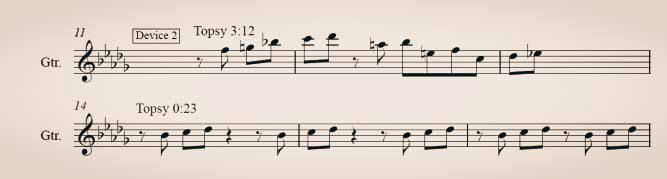
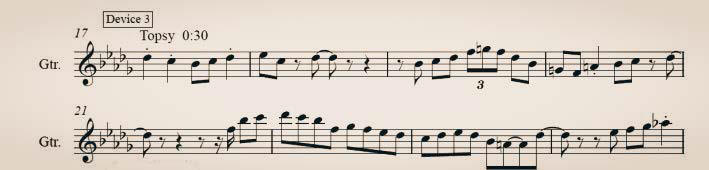
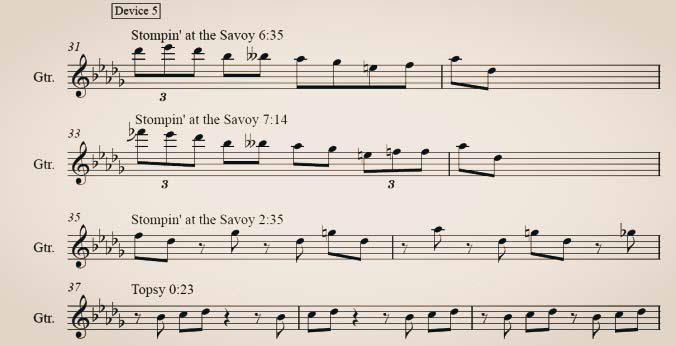
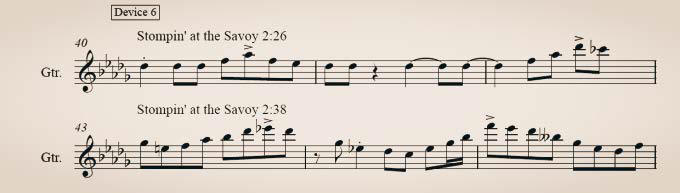
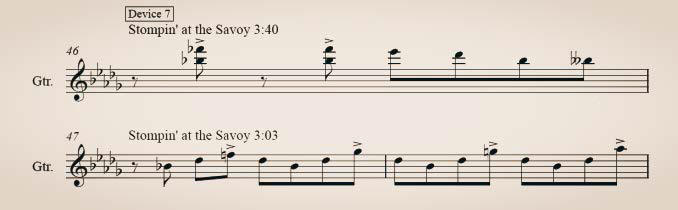
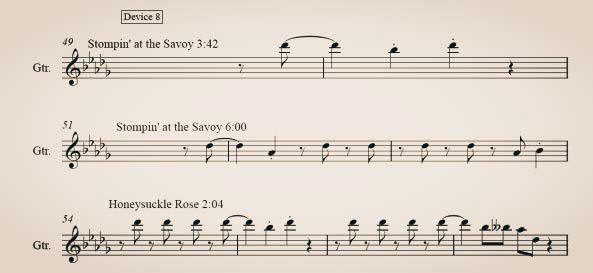
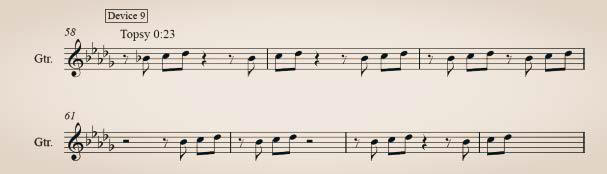
Gitler, 40. The ways in which Christian anticipated and influenced bebop phrasing at large can also be seen in the work of Haruko Yoshizawa, who focused on bebop phrasing – specifically how it applies to bebop pianists Tommy Flanagan, Barry Harris, Hampton Hawes, Hank Jones, Duke Jordan, Bud Powell, and Cedar Walton, using examples recorded in 1944 and later – in his 1999 “Phraseology: A Study of Bebop Piano Phrasing and Pedagogy.” He defined bebop phrasing by the presence of ten common devices: (1) uneven, unaccented eighth notes, (2) strings of eighth notes groups into detached two-note sub-phrases with legato articulation linking each upbeat to the next downbeat, (3) melodic lines consisting of sub-phrases of varied length, signified by legato and staccato articulations, (4) playing notes detached on the weak beats of syncopated phrases, (5) playing the final note of a phrase on a weak beat short (i.e. which some say is the source of the name bebop, i.e. a “BEEbop” articulation), (6) accenting the highest pitch (or pitches) of a melodic line, (7) accenting the weak part of the beat in a syncopated figure, (8) anticipating and accenting the first note of a phrase that is expected to begin on the downbeat, (9) accenting the final note on the weak part of the beat within a phrase, and (10) the presence of ghost notes. Yoshizawa credits the innovation of bebop phrasing to Charlie Parker, Dizzy Gillespie, Thelonious Monk, Bud Powell, Kenny Clarke, and Max Roach.73 However, through analysis of these performances of “Topsy (“Swing to Bop”),” “Stompin’ at the Savoy,” and “Honeysuckle Rose (“Up on Teddy’s Hill”)” captured by Newman at Minton’s, I argue that years before the examples from these bebop masters cited by Yoshizawa and other scholars, guitarist Charlie Christian was exhibiting the essential characteristics of bebop’s essential phrasing and deserves more recognition for his influence on bebop as a whole. This represents the rhythmic and articulatory innovations Taylor, Gordon, and Kessel refer to. (The transcriptions accompanying this section all come from Leo Valdes as well.) 73 Yoshizawa, 12. • Device one (uneven, unaccented eighth notes) is ubiquitous in Christian’s playing. For example, this kind of eighth note can be found in beat three of measure eighteen through measure twenty of the second bridge of the first solo of “Topsy,” measures twenty-two and twenty-three of the third chorus of “Stompin’ at the Savoy,” the entirety of measure twenty-three of the first chorus of “Honeysuckle Rose,” and similarly measure twenty-six of “Honeysuckle Rose.”
• Device two (grouping eighth notes in pairs starting on the upbeat) is fairly common in Christian’s playing as well. It frequently occurs in bridges as well as blues phrases in “Topsy,” for example, measure nineteen of the sixth chorus. Additionally, the final riff of the first chorus of “Topsy” features this legato upbeat Bb connecting to a downbeat C that is detached from the following upbeat.
• Device three (melodic lines with sub-phrases of varied lengths, indicated by legato and staccato articulation) illustrates two elements of Christian’s improvisation. On the large scale, this device describes the varied phrases that make up the six choruses of the first solo on “Topsy” and give the material its freshness. On a smaller scale, this explains the way the phrase over the first A section of the second chorus of this solo can be made up of smaller figures including a run of ten legato eighth note in measure six as well as separated eighth notes in measure seven and staccato quarter notes in measures one, four, and eight.
• Device four (detached notes on the weak beats of syncopated figures) repeatedly comes up in Christian’s solos here, from detached offbeat Gb-Ab-Gb of measure nine and ten of Christian’s first chorus of “Stompin’ at the Savoy,” to the repeated offbeat, detached Db eighth notes of bars two, four, ten and twelve of the fourth chorus of “Honeysuckle Rose.”
• Device five (Gottlieb’s explanation of the name bebop, the detached final note on the weak part of the beat) can be found in both Christian’s legato phrases and his short blues figures. For example, see the similar two-bar phrases ending on beat one of measure seven on the second chorus of Christian’s second solo in “Stompin’ at the Savoy” and beat one of measure fifteen of the third chorus of the same solo. Bluesier examples can be found in the repeated riff in measures nine-thirteen of the second chorus of Christian’s first solo on “Stompin’ at the Savoy” and the Db of the repeated riff at the end of the first chorus of “Topsy.”
• Device six (accenting the highest pitch in a melodic line) occurs with great frequency throughout Christian’s improvisation as well. For instance, it can be heard twice within the first four measures of Christian’s first solo on “Stompin’ at the Savoy,” on the Ab on the upbeat of beat three in measure two and the Db on beat three of measure four. Christian employs this device again on the Eb on beat four of measure twelve and the F on beat one of measure fourteen in this same solo.
• Device seven (accenting the weak part of the beat in a syncopated figure) occurs often in conjunction with device four (i.e. the accented weak beats are often also detached). Examples of this can be heard in the fifth measure of the third chorus of Christian’s first solo on “Stompin’ at the Savoy,” where accented Fb notes are played on the upbeats of beat one and two. These particular notes are especially accented because Christian not only plays them with increased volume, but also because he adds a harmonic tritone below for extra support. Additionally, the rising F, Gb, G, Ab on the upbeats of two and four of measure three and four of the second chorus of Christian’s first solo on “Stompin’ at the Savoy” exemplify this syncopated accenting of weak beats within a figure.
• Device eight (accenting the anticipated first note of a phrase, tied to the next downbeat) is less common than the other devices because Christian does not anticipate as many downbeats with tied phrases as the bebop pianists Yoshizawa discusses at length due. But, it can still be found in these solos, specifically on the accented Db tied to beat one of measure seven of the third chorus of Christian’s first solo on “Stompin’ at the Savoy” that anticipates the downbeat of the following phrase of staccato notes.74 In the second solo on this piece, Christian introduces a similar staccato phrase with a Db one octave lower tied to the downbeat of measure seven of the first chorus. Christian uses this device again in “Honeysuckle Rose,” taking the final accented final Db of a repeated staccato Db formulaic passage and extending it through beat one of measure five of the fourth chorus to anticipate the following phrase. 74 Though Christian’s formulas are not the focus of my analysis here, it is worthwhile to note that the use of staccato repetitions of the same note played on alternating strings and frets is an important formula Christian uses consistently in all three of the improvisations discussed in this paper. This is almost certainly related to Lester Young’s formula of using alternate fingerings on repeated notes.
• Just as devices seven and four often appear together, device nine (the accented final note on the weak part of the beat) often occurs detached, as the final note on the weak part of a beat is described in device five. One of the most blatant examples of phrases ending with heavily accented weak beats is the repeated micro-phrase from the end of chorus one of Christian’s first solo on “Topsy.” Christian also uses this device on the repeated F notes in the micro-phrases ending on beat one of measure two, four, six, and eight in the fourth chorus of the first solo of “Topsy.”
• Device ten (ghost notes) varies tremendously from instrument to instrument. While Yoshizawa discusses pianists, as a guitarist, Christian has different techniques for creating ghost notes. For example, in the final bars of the fourth chorus of Christian’s first solo on “Topsy,” Christian does not strike the string to sound the middle triplets, instead just hammering the fret to create those notes. This could be viewed as a ghost note. Alternatively, at the end of the first chorus of Christian’s first solo on “Stompin’ at the Savoy,” Christian plays harmonic fifths and fourths, from which he glissandos downward. The notes he lands on during this measure could also be seen as ghost notes. However, the most convincing ghost notes as those Christian plays by muted the strings, creating primarily a percussive effect, found at measure 16 and 32 of the third chorus of the first solo in “Topsy.” Admittedly, Christian uses this device sparingly, but it can be found in these pieces.
While I have shown
some of the bebop touchstones that appeared in Christian’s 1941
work, Christian’s source for this material remains an unsolved
problem. The late night jam session atmosphere of Minton’s to the
time was surely a contributing factor, giving Christian more time to
develop longer solos with more interesting phrasing and harmonic
experimentation that he could during his day job with Benny Goodman.
The development of longer and more varied phrases ultimately seems
like it could naturally occur for a curious musician, eager to
expand the horizons of his playing. Some of the more technical
points relating to articulation, however, may have a more direct
source in Young’s playing. |
|
The examples shown in this excerpt were all transfigured
The original transcriptions can be viewed here: Christopher Dennison’s entire thesis can be viewed here:
|
[ Discography Index ] [ Tune Title Index ]
|